


Thumb sucking is one of the most common habits among young children — it provides comfort, helps babies feel secure, and even aids them in falling asleep. Most infants and toddlers engage in some form of thumb or finger sucking, and in the early years, it’s usually harmless. But if it continues too long it can affect your child’s dental and facial development.
How long is too long?
Most children gradually stop on their own between ages 2 and 4, as they find other ways to self-soothe. But if the habit persists past the age of 5 or 6, it’s worth paying attention. Once the permanent teeth start to erupt around 6 years the thumb can get in the way and cause:
- Open bite: front teeth may not meet properly when the mouth is closed (only the back teeth meet)
- Overjet (buck teeth): upper front teeth may be pushed forward.
- Speech difficulties: such as lisping or tongue thrusting.
- Changes in jaw growth: prolonged thumb sucking can influence the shape of the upper jaw and palate.
How to Help Your Child Stop Thumb Sucking
Breaking the habit takes time, patience, and positive reinforcement. Here are some proven strategies:
1. Offer Positive Reinforcement
Praise your child for not sucking their thumb rather than punishing them when they do. A reward chart with stickers or small incentives can work wonders for motivation.
2. Identify Triggers
Notice when your child tends to suck their thumb — bedtime, during TV, or when anxious — and address the underlying cause. Provide comfort, distraction, or a soothing bedtime routine.
3. Keep Hands Busy
Encourage activities that occupy their hands, such as crafts, puzzles, or holding a stuffed toy. This helps reduce idle moments that trigger thumb sucking.
4. Use Gentle Reminders
A calm verbal reminder or a bandaid/sticking plaster on the thumb can serve as a cue, not a punishment. Avoid scolding or shaming — it can increase anxiety and make the habit worse. But some have had success with using bitter-tasting nail varnishes on the thumbs to break the habit. They are available at chemists and online. Brands include Mavala and Stop Nail Biting (a particularly imaginative name). Past generations used chilli on the child’s thumbs (a bit severe!)
5. Dental Appliances (for Older Children)
If other methods don’t work and the habit is causing dental issues, your dentist at Power Dental Practice may recommend a habit-breaking appliance. These are custom-made devices fitted to the mouth. The most basic is often called a spinner, as it has a small bead on a wire that spins and attracts the tongue and corrects its posture but also gets in the way of the thumb sitting comfortably in the mouth. This is highly effective. Here is a picture of this appliance (which is cemented in place for a few months):
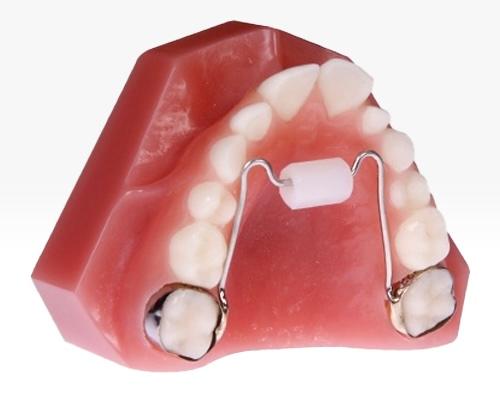
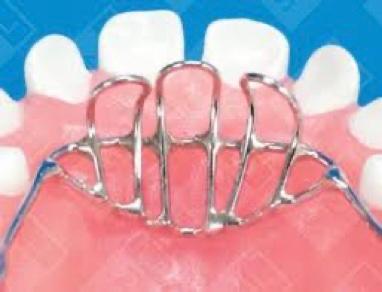
If this does not work out we can use another version (a cage habit appliance) with a small cage which looks like this (but we rarely need to use this one):
When to Visit a Dentist
If your child continues to suck their thumb beyond age 5 or if you notice changes in their bite or tooth alignment, schedule a dental check-up. Early evaluation allows your dental practitioner at Power Dental Practice to monitor growth and offer advice or any intervention that may be needed.